Synthetic pentadecapeptide; investigational tissue-repair peptide
BPC-157
Also known as BPC 157, Bepecin, Body Protection Compound 157, PL 14736, Stable gastric pentadecapeptide BPC 157
Not FDA-approved for any indication and not currently on the FDA 503A or 503B bulks lists. FDA removed BPC-157 from 503A Category 2 on April 22, 2026 because nominations were withdrawn; PCAC review is scheduled for July 23, 2026.
- Healing
- Not legal · US
- injection
- 1991

What it is
BPC-157 is a synthetic pentadecapeptide derived from research on body protection compound sequences associated with gastric juice and gastric mucosal protection[1 ,7 ]. It has become one of the most discussed “healing peptides” in sports-medicine, biohacking, and recovery communities, where it is commonly marketed for tendon injury, ligament injury, joint pain, gut repair, and general tissue recovery. Those consumer claims are far broader than the published human evidence supports.
Chemical structure
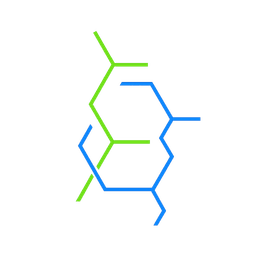
BPC-157 is a 15-amino-acid peptide with the sequence GEPPPGKPADDAGLV and molecular formula C62H98N16O22[1 ]. It is described in the literature as a stable gastric pentadecapeptide, but no FDA-approved human drug product containing BPC-157 exists in the United States[2 –6 ].
Research lineage
Most of the BPC-157 literature comes from a long-running preclinical research program, largely from investigators affiliated with the University of Zagreb[7 –12 ]. In animal and cell models, BPC-157 has been studied in gastrointestinal injury, fistula healing, tendon and muscle injury, corneal injury, vascular disturbance, nitric-oxide-system interactions, and angiogenesis-related tissue repair[7 –12 ]. These studies are mechanistically interesting, but they are not a substitute for randomized human clinical trials.
Mechanism
Mechanistically, published research has proposed several overlapping pathways, including effects on nitric oxide signaling, angiogenesis modulation, VEGF-related tissue repair, endothelial function, and cytoprotection[7 –12 ]. These mechanisms are usually inferred from animal models, histology, gene-expression measures, and tissue-function endpoints. They should not be translated into claims that BPC-157 predictably heals human tendons, reverses gut disease, treats pain, or improves recovery.
BPC-157 has been investigated under the name bepecin or PL 14736 in at least one registered safety/pharmacokinetic trial, but no completed, published, approval-quality clinical trial was identified for common marketed uses such as tendon injury, muscle injury, inflammatory bowel disease, or joint pain[1 ,13 ]. A recent review discussing pain and tissue repair identified limited human data, including small retrospective or survey-based reports, but not randomized trials adequate to establish efficacy[14 ].
Products advertised online as BPC-157 are usually sold as research chemicals or non-FDA-approved injectable or oral products. Because BPC-157 has no FDA-approved label, there is no approved route, dose, indication, contraindication profile, drug-interaction framework, or long-term safety database. This page describes published research and regulatory status only.
Regulatory status
BPC-157 is not FDA-approved for any indication. No FDA-approved prescription product, OTC drug, biologic, food additive, or dietary supplement pathway for BPC-157 was identified in FDA materials reviewed for this draft[2 –6 ].
April 2026 503A removal — procedural, not authorization
Under section 503A, state-licensed pharmacies and physicians may compound using a bulk drug substance only if the substance complies with an applicable USP/NF monograph, is a component of an FDA-approved drug product if no monograph exists, or appears on FDA’s 503A bulks list[2 ]. FDA’s April 22, 2026 503A update states that BPC-157 was removed from Category 2 because nominations were withdrawn and that FDA intends to consult the Pharmacy Compounding Advisory Committee on July 23, 2026 about possible inclusion of BPC-157 acetate and BPC-157 free base on the 503A bulks list[3 ].
That April 2026 removal is procedural, not authorization. BPC-157 is not listed in 503A Category 1 in the April 22, 2026 document, and Category 1 is the interim category for nominated substances that may receive enforcement discretion while FDA evaluates them[2 –3 ]. Until FDA makes a final or otherwise applicable determination, BPC-157 should not be treated as legally compoundable merely because its withdrawn nomination was removed from Category 2[2 –3 ].
503B and FDA safety-risk listing
Under section 503B, outsourcing facilities may compound from bulk drug substances only if the substance appears on FDA’s 503B bulks list or the compounded drug appears on FDA’s shortage list at the relevant time[4 ]. BPC-157 was not identified on the FDA 503B category PDF reviewed for this draft[5 ]. FDA’s safety-risk page lists BPC-157 among withdrawn nominated substances and states that compounded drugs containing BPC-157 may pose immunogenicity risk for certain routes of administration and may have complexities related to peptide impurities and active pharmaceutical ingredient characterization[6 ].
FDA also states that it has no or only limited safety-related information for proposed routes of administration and therefore lacks sufficient information to know whether compounded BPC-157 would harm humans[6 ]. This language does not prove that BPC-157 is unsafe in every context; it means FDA has not identified enough safety information to support compounding-policy confidence[6 ].
Controlled-substance and anti-doping status
BPC-157 is not listed in the federal controlled-substance schedules in 21 CFR Part 1308 as reviewed for this draft[15 ]. Lack of DEA scheduling does not make BPC-157 lawful to sell, prescribe, or compound. For athletes, USADA states that BPC-157 is prohibited under WADA’s S0 Unapproved Substances category and that there is no clinical basis for a therapeutic use exemption because it is not an approved therapeutic agent in any country[16 ].
Date of last regulatory verification: May 5, 2026.
Research summary
The most defensible summary is that BPC-157 has extensive preclinical research and very limited human evidence. PubChem identifies BPC-157 as bepecin and notes investigation in a clinical trial record, but substance registration and trial registration do not establish safety or efficacy[1 ,13 ].
Gastrointestinal and fistula models
Preclinical gastrointestinal and fistula research is a major theme. Klicek and colleagues studied BPC-157 in rat colocutaneous fistulas and framed the compound as being in clinical trials for inflammatory bowel disease at that time[11 ]. Grgic and colleagues later studied rat colovesical fistulas and reported healing effects in a rat model[8 ]. These are animal-model findings; they do not demonstrate that BPC-157 treats inflammatory bowel disease, fistulas, ulcers, or gut permeability in humans.
Musculoskeletal models
Musculoskeletal research is also largely animal-based. Studies from the Zagreb group and collaborators have examined tendon, ligament, muscle, and myotendinous-junction injuries in rats[10 ,12 ]. One rat myotendinous-junction study reported improvements in macroscopic, microscopic, biomechanical, and functional measures after BPC-157 administration[10 ]. These outcomes are relevant to hypothesis generation, but no large randomized human trial was identified showing that BPC-157 heals tendons, ligaments, or muscle injuries in patients.
Mechanism studies
Angiogenesis and nitric-oxide-system research provide mechanistic hypotheses. Hsieh and colleagues reported that BPC-157 modulated angiogenesis in muscle and tendon healing models[12 ]. Sikiric and colleagues reviewed BPC-157 interactions with the nitric oxide system and proposed roles in vascular integrity and injury responses[9 ]. Mechanistic plausibility is not the same as clinical efficacy, especially when most data come from animal models and a concentrated research network.
Ophthalmic and other tissue-injury models have also been studied preclinically. Masnec and colleagues evaluated BPC-157 in rat corneal perforation injury[17 ]. Other publications discuss vascular, neurologic, and systemic injury models[7 ,9 ]. These findings should be described as preclinical only.
Where the evidence ends
Human evidence remains the limiting factor. A 2026 review of BPC-157 in tissue repair and pain management noted a lack of well-designed human studies and discussed only small human reports, including retrospective or survey-based data with substantial limitations[14 ]. No randomized, placebo-controlled trial was identified showing clinical benefit for the consumer-facing indications that dominate online marketing.
Overall, BPC-157 should be presented as an investigational peptide with substantial preclinical literature and insufficient human clinical evidence. The research summary should not state or imply that animal findings translate into proven human benefits for injury recovery, inflammatory bowel disease, arthritis, pain, bodybuilding, anti-aging, or performance.
Public discourse
Andrew Huberman, PhD, neuroscientist and host of Huberman Lab, discussed BPC-157 as unusual because public use has expanded despite minimal human evidence[18 ].
essentially no human data
Rena Malik, MD, urologist and public medical educator, emphasized the absence of randomized trial evidence for BPC-157[19 ].
There are zero randomized clinical trials on BPC 157.
Eric Topol, MD, cardiologist and director of Scripps Research Translational Institute, criticized broad wellness use of unapproved peptides[20 ].
None of them are proven.
The U.S. Anti-Doping Agency has framed BPC-157 as an experimental compound rather than an approved therapy[16 ].
not approved for human clinical use
Public discourse reflects the views of the speakers cited and does not represent medical advice or the editorial position of ProPeptideGuide.
Side effects and safety
BPC-157 has no FDA-approved prescribing information. There is therefore no FDA-reviewed label establishing contraindications, common adverse reactions, drug interactions, pregnancy or lactation safety, carcinogenicity data, or long-term monitoring recommendations[2 –6 ].
Compounding-related risks
FDA’s stated compounding concerns include immunogenicity risk for certain routes, peptide aggregation or impurity concerns, and active pharmaceutical ingredient characterization complexity[6 ]. These are quality and biologic-product concerns, not ordinary supplement concerns. They matter especially for injectable products, where sterility, endotoxin burden, potency, identity, and particulate contamination can directly affect patient safety[6 ].
Mechanism-based concerns
Theoretical safety concerns follow from the proposed tissue-repair and angiogenesis mechanisms. If a substance affects angiogenesis, cell migration, or inflammatory signaling in injured tissue, clinicians and reviewers should consider whether it might have unwanted effects in malignancy, abnormal scarring, vascular disease, pregnancy, autoimmune disease, or active infection. Human data are not adequate to quantify those risks for BPC-157.
Grey-market sourcing
Grey-market sourcing adds separate risks. Products sold as “research use only” may still be marketed with human-use instructions, and there is no assurance that such products contain the labeled peptide at the labeled amount or meet sterile-injectable quality standards. USADA warns athletes not to use products marketed for research only[16 ].
Long-term human safety data are insufficient. Patient reports of benefit or tolerability cannot establish safety, especially when products vary by salt form, purity, concentration, route, and manufacturer.
Available through
BPC-157 is not currently available through FDA-compliant prescription or compounding channels in the United States as of 2026-05-05[2 –6 ]. It is not FDA-approved, is not on the 503A or 503B bulks lists, and was removed from 503A Category 2 because nominations were withdrawn rather than because FDA determined it should be compounded[3 –6 ].
ProPeptideGuide does not link to or endorse grey-market vendors, research-chemical sellers, online peptide shops, or clinics advertising BPC-157 for injury recovery, gut repair, anti-aging, bodybuilding, or performance use.
Frequently asked questions
Is BPC-157 FDA-approved?
Can BPC-157 be legally compounded?
Does BPC-157 heal tendons or ligaments?
Is BPC-157 proven for gut repair?
Is oral BPC-157 safer than injectable BPC-157?
Is BPC-157 banned in sport?
Is BPC-157 a controlled substance?
Why is BPC-157 so popular if human data are limited?
References
- National Center for Biotechnology Information. PubChem Compound Summary for BPC-157, CID 9941957 . Accessed 2026-05-05 . Source
- U.S. Food and Drug Administration. Bulk Drug Substances Used in Compounding Under Section 503A of the FD&C Act . Content current as of 2026 . Source
- U.S. Food and Drug Administration. Bulk Drug Substances Nominated for Use in Compounding Under Section 503A . Updated April 22, 2026 . Source
- U.S. Food and Drug Administration. Bulk Drug Substances Used in Compounding Under Section 503B of the FD&C Act . Content current as of January 7, 2025 . Source
- U.S. Food and Drug Administration. Bulk Drug Substances Nominated for Use in Compounding Under Section 503B . Updated March 21, 2025 . Source
- U.S. Food and Drug Administration. Certain Bulk Drug Substances for Use in Compounding that May Present Significant Safety Risks . Content current as of April 22, 2026 . Source
- Sikiric P, Gojkovic S, Knezevic M, et al.. Stable Gastric Pentadecapeptide BPC 157: Prompt Particular Activation of Collateral Pathways . Curr Med Chem . 2023;30(13):1568-1573 . doi:10.2174/0929867329666221005111553 PMID: 36200148
- Grgic T, Grgic D, Drmic D, et al.. Stable gastric pentadecapeptide BPC 157 heals rat colovesical fistula . Eur J Pharmacol . 2016;780:1-7 . doi:10.1016/j.ejphar.2016.02.038 PMID: 26875638
- Sikiric P, Seiwerth S, Rucman R, et al.. Stable gastric pentadecapeptide BPC 157-NO-system relation . Curr Pharm Des . 2014;20(7):1126-1135 . PMID: 23755725
- Vukojevic J, Milavic M, Perovic D, et al.. Stable Gastric Pentadecapeptide BPC 157 as a Therapy for the Disable Myotendinous Junctions in Rats . Biomedicines . 2021;9(11):1546 . doi:10.3390/biomedicines9111546 PMID: 34829776
- Klicek R, Sever M, Radic B, et al.. Pentadecapeptide BPC 157, in clinical trials as a therapy for inflammatory bowel disease (PL14736), is effective in the healing of colocutaneous fistulas in rats: role of the nitric oxide-system . J Pharmacol Sci . 2008;108(1):7-17 . doi:10.1254/jphs.fp0072161 PMID: 18818478
- Hsieh MJ, Liu HT, Wang CN, et al.. Modulatory effect of gastric pentadecapeptide BPC 157 on angiogenesis in muscle and tendon healing . J Physiol Pharmacol . 2017;68(4):559-570 . PMID: 20388964
- ClinicalTrials.gov. PCO-02 Safety and Pharmacokinetics Trial, NCT02637284 . Accessed 2026-05-05 . Source
- Sinadinos A, et al.. From Regeneration to Analgesia: The Role of BPC-157 in Tissue Repair and Pain Management . Cureus . 2026 . Source
- 21 CFR Part 1308 — Schedules of Controlled Substances . Code of Federal Regulations . Accessed 2026-05-05 . Source
- U.S. Anti-Doping Agency. BPC-157: Experimental Peptide Prohibited . Accessed 2026-05-05 . Source
- Masnec S, Kokot A, Zlatar M, et al.. Perforating corneal injury in rat and pentadecapeptide BPC 157 . Exp Eye Res . 2015;136:9-15 . doi:10.1016/j.exer.2015.04.016 PMID: 25912999
- Huberman A. Benefits & Risks of Peptide Therapeutics for Physical & Mental Health . Huberman Lab . 2024 . Source
- Malik R. BPC 157: Zero Human Trials? . YouTube . February 21, 2026 . Source
- Perrone M. What's behind the trendy peptide injections being sold by influencers and RFK Jr. allies . Associated Press . 2026 . Source
International availability
Regulatory status differs by jurisdiction. Each entry below is sourced to the local regulator or pharmacopoeia and dated.
World Anti-Doping Agency (WADA)
Banned / warnedProhibited at all times under category S0 (Non-Approved Substances) on the 2026 WADA Prohibited List. USADA states there is no clinical basis for a Therapeutic Use Exemption because BPC-157 is not an approved therapeutic in any country.
USADA — BPC-157 athlete advisoryVerified May 7, 2026
European Union (EMA)
UnapprovedNo EMA marketing authorization. BPC-157 is not approved as a medicine in any EU member state.
EMA medicines databaseVerified May 7, 2026
United Kingdom (MHRA)
UnapprovedNo MHRA marketing authorization. Sale of BPC-157 as a medicine is unlawful without a license.
Verified May 7, 2026
Australia (TGA)
UnapprovedNot entered on the Australian Register of Therapeutic Goods. Supply outside an authorized clinical trial is not lawful.
Verified May 7, 2026
ProPeptideGuide does not facilitate cross-border importation or evade local prescription requirements. This section describes regulatory status for reference; obtaining a prescription medicine requires a lawful local prescription in the relevant jurisdiction.
Continue exploring
See full map →Same mechanism family · Healing
Same regulatory status · Not currently legal in US
Frequently researched together